Skin testing vs. blood testing for allergy
There is often confusion about the difference between blood testing and skin testing when diagnosing allergies. Although they are done in different ways, both tests are looking for the same thing: the likelihood of an allergic reaction, interpreted in the context of the clinical history.
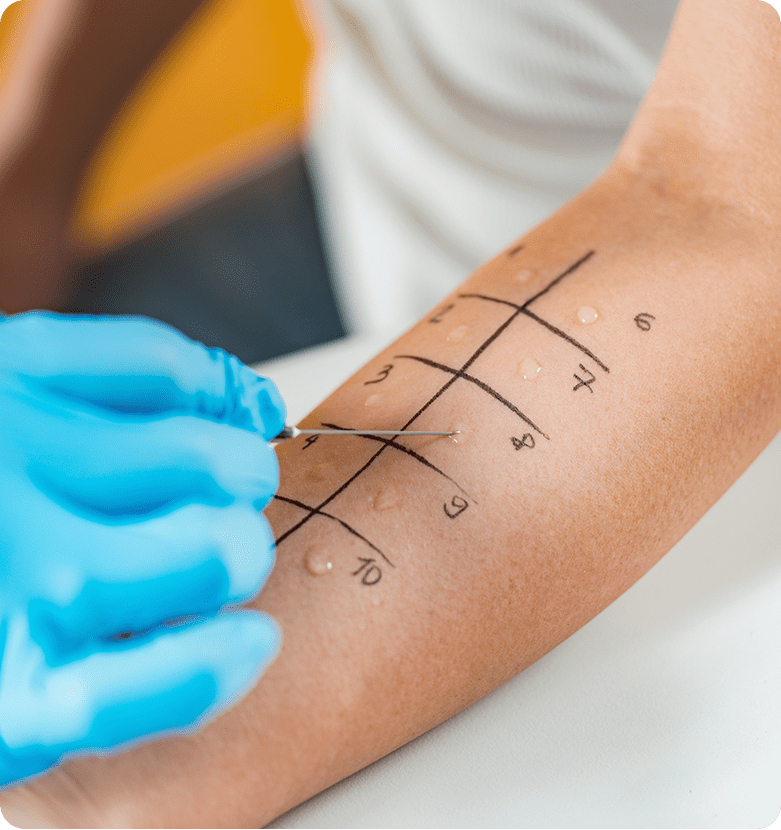
Skin prick testing
Skin prick testing measures how reactive the IgE antibodies are in the skin, while blood testing measures the level of IgE antibodies circulating in the blood. One of the main advantages of skin prick testing is that it can be performed on the same day as the consultation and provides immediate results. This allows a management plan to be discussed and put in place straight away. Skin prick testing is also less likely to produce false-positive results in individuals with severe eczema, and a negative skin prick test is highly reliable for ruling out an allergy.
However, skin prick testing is not always possible. It can’t be done if the allergen is not available for testing, if eczema is so severe that there is no suitable area of skin to test, or if antihistamines have been taken within 48 hours of the appointment, as this can affect the results.

Blood testing
Blood testing, by contrast, takes longer for results to return. In people with significant eczema, it is more likely to produce false positive results, which can lead to unnecessary dietary restrictions. For this reason, broad panels of specific IgE blood tests, particularly in children with eczema, are generally not recommended.
In summary, skin tests and specific IgE blood tests provide similar information, but the choice of test depends on the individual situation. The clinical history, the availability of the allergen to be tested, and the severity of eczema all help determine which test is most appropriate. The best course of action is to consult a doctor, who will advise on the appropriate type of testing for your child and their allergies.
In summary…
Skin tests and specific IgE blood tests provide similar information, but the choice of test depends on the individual situation. The clinical history, the availability of the allergen to be tested, and the severity of eczema all help determine which test is most appropriate. The best course of action is to consult a doctor, who will advise on the appropriate type of testing for your child and their allergies.
If you’re concerned about your child’s allergy symptoms, don’t navigate this journey alone.
Ask Dr Nick…
Healthy adventures
Your allergy survival guide