Managing cow’s milk protein allergy in children

Cow’s milk protein allergy (CMPA) is one of the most common issues we see in paediatric allergy clinics. Recent studies suggest that around 1% of children have an allergy to cow’s milk protein. Interestingly, this is split almost equally, with 50% IgE-mediated and 50% non-IgE-mediated. which presents unique challenges for diagnosis and management.

Two Types of CMPA: What’s the Difference?

CMPA is usually grouped into two types, depending on how the immune system reacts.

IgE-mediated CMPA (Immediate reactions)

These reactions happen quickly, often within minutes of having milk. Symptoms may include:

  • Redness or flushing of the skin
  • Swelling of the lips, eyes, or face
  • Hives (raised itchy rash)
  • Vomiting
  • In rare cases, a severe reaction called anaphylaxis

These reactions are usually easier to spot because they happen straight after milk is consumed.

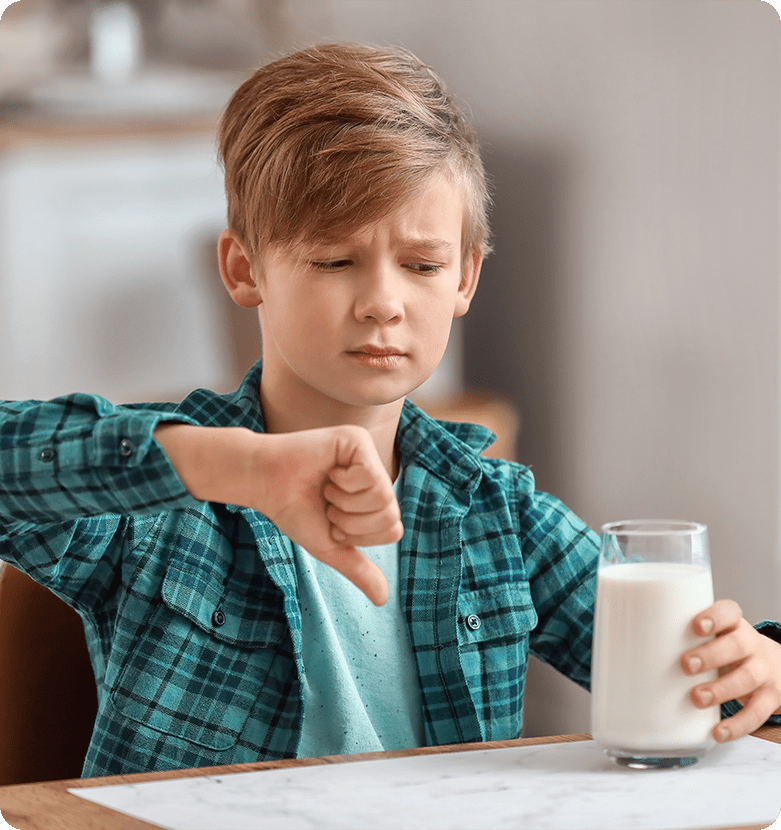
Young boy in a teal plaid shirt frowns and gives a thumbs-down to a glass of milk on a table, expressing dislike or disapproval indoors.
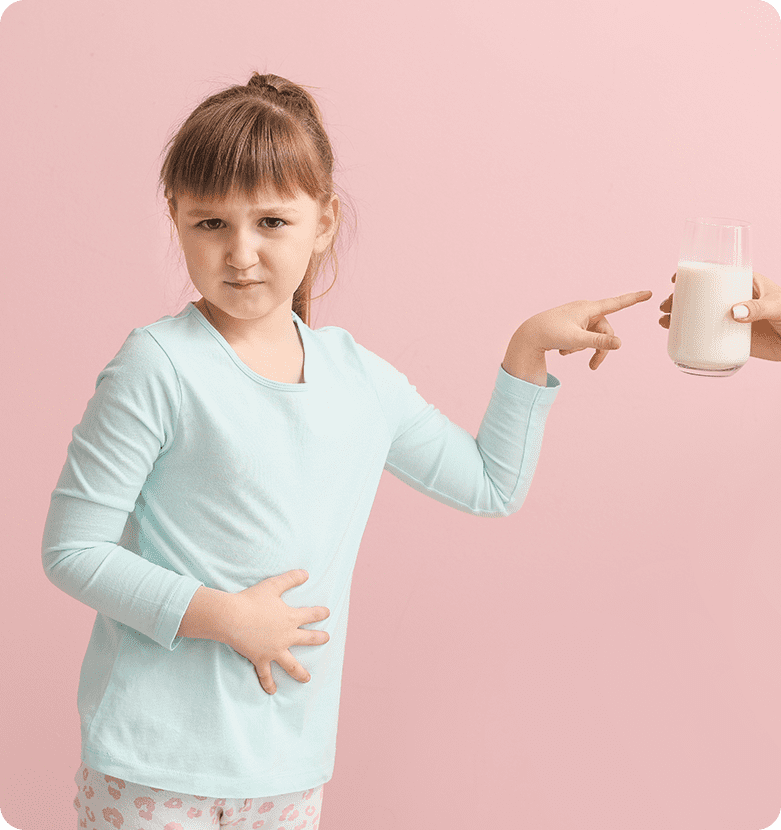
A young girl with light brown hair has a concerned expression as she points at a glass of milk in front of her, holding her other hand to her stomach.

Non-IgE-mediated CMPA (Delayed reactions)

This type is more subtle and can be harder to recognise. Symptoms usually appear 2 to 24 hours later, or even longer. Common signs include:

  • Reflux: Especially reflux that doesn’t improve with usual treatments, or where babies arch their back and cry in pain
  • Eczema: Particularly eczema that starts early in life and doesn’t improve despite good skincare and steroid creams. In breastfed babies, eczema may flare when mum eats dairy.
  • Constipation: This is often different from typical constipation. Babies may strain and seem uncomfortable, but still pass soft, normal stools.
  • Blood in the stool: This can happen, especially in breastfed babies, and is a common sign of milk protein irritation in the gut.

What parents need to know

Babies and cow’s milk allergies
The path to pesolution: The milk ladder
The difference between cow's milk protein allergy and lactose intolerance

When should I seek help for my child’s cow’s milk allergy?

If your child has immediate reactions to milk, such as swelling, hives, or vomiting soon after feeding, national guidance recommends referral to a specialist allergy clinic. This helps confirm the diagnosis, often using simple tests like a skin prick test, and ensures you receive the right dietary support.

Children with delayed symptoms can often be safely managed by your GP using established guidelines, with specialist input if needed.

Telephone icon

If you’re unsure what type of reaction your child is having, or you’re worried about ongoing symptoms, don’t struggle on alone.